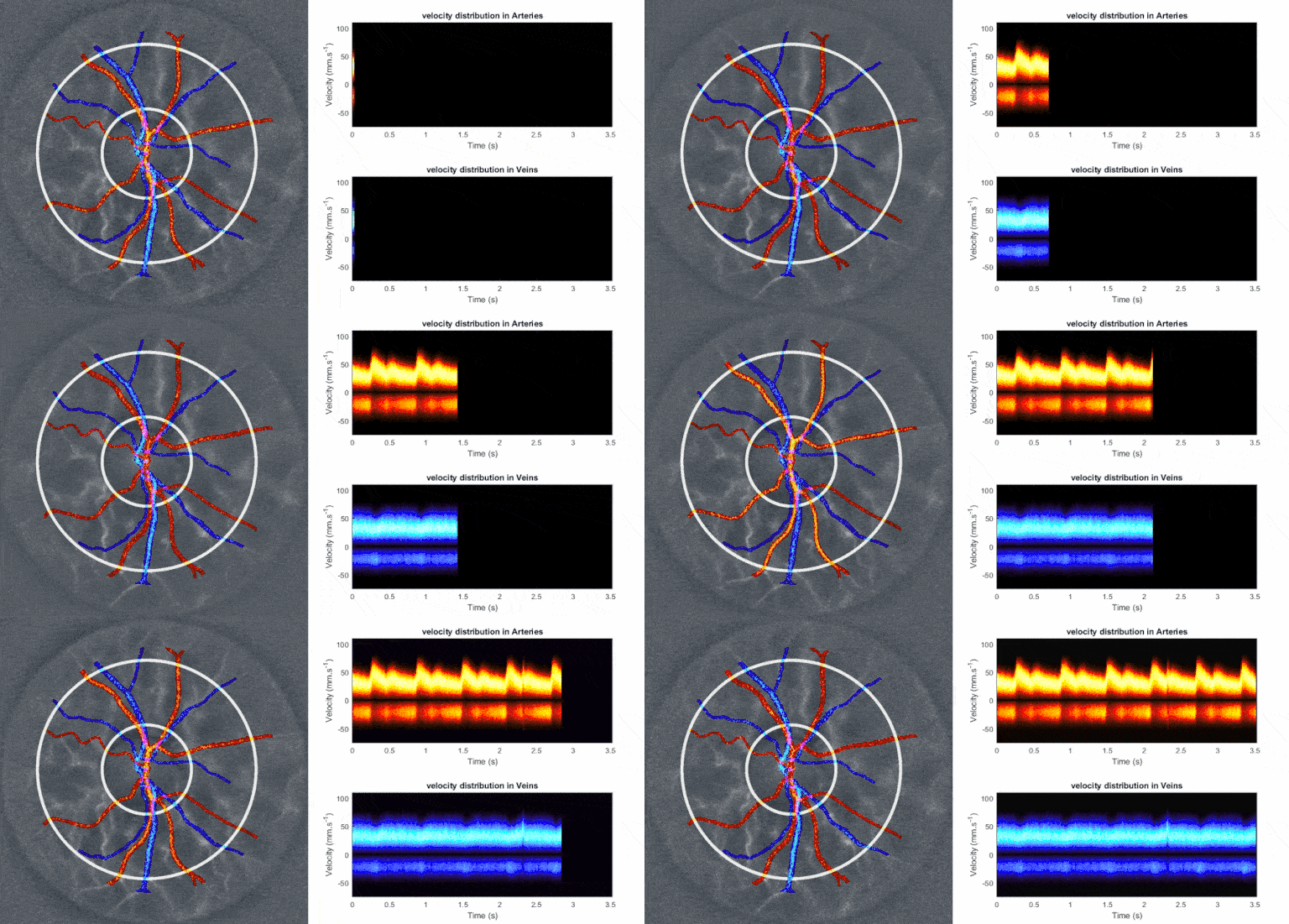
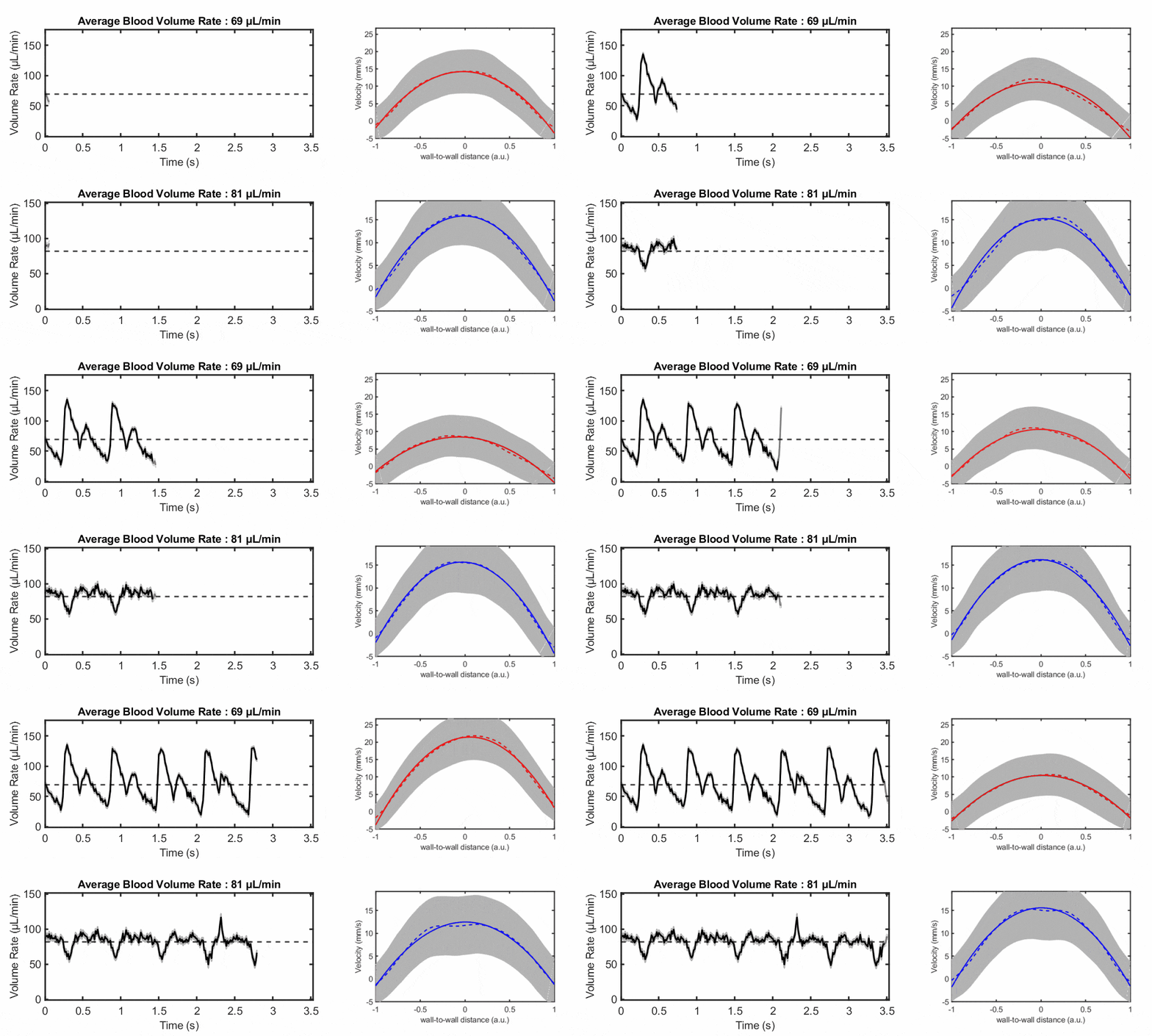
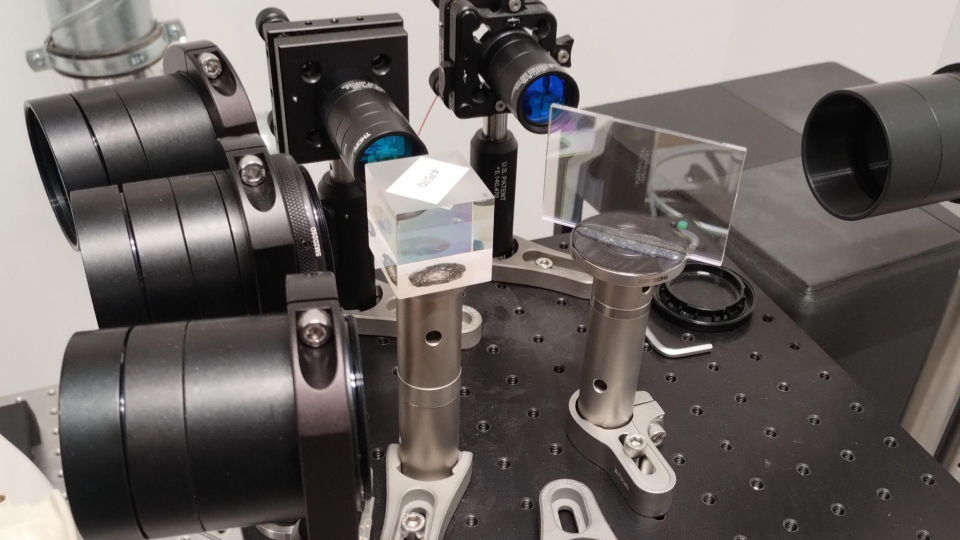
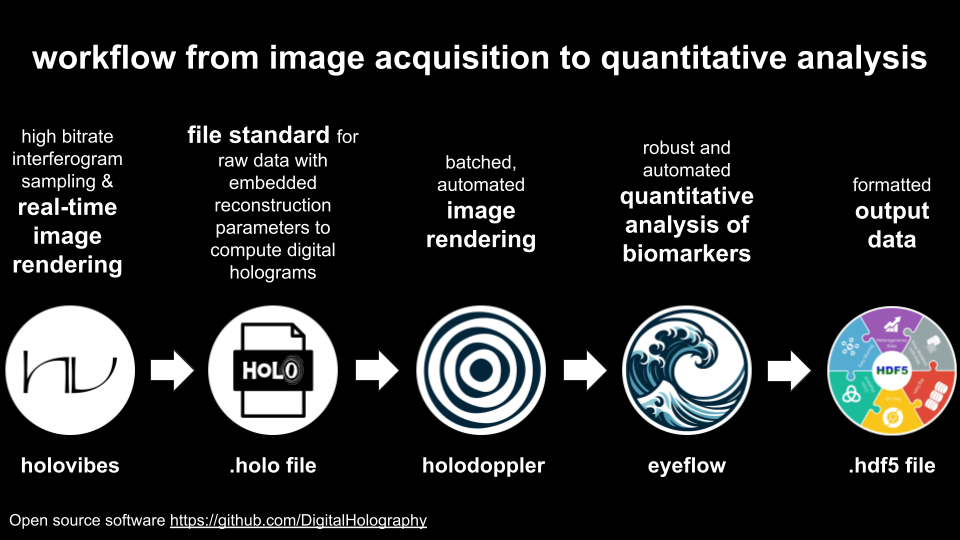
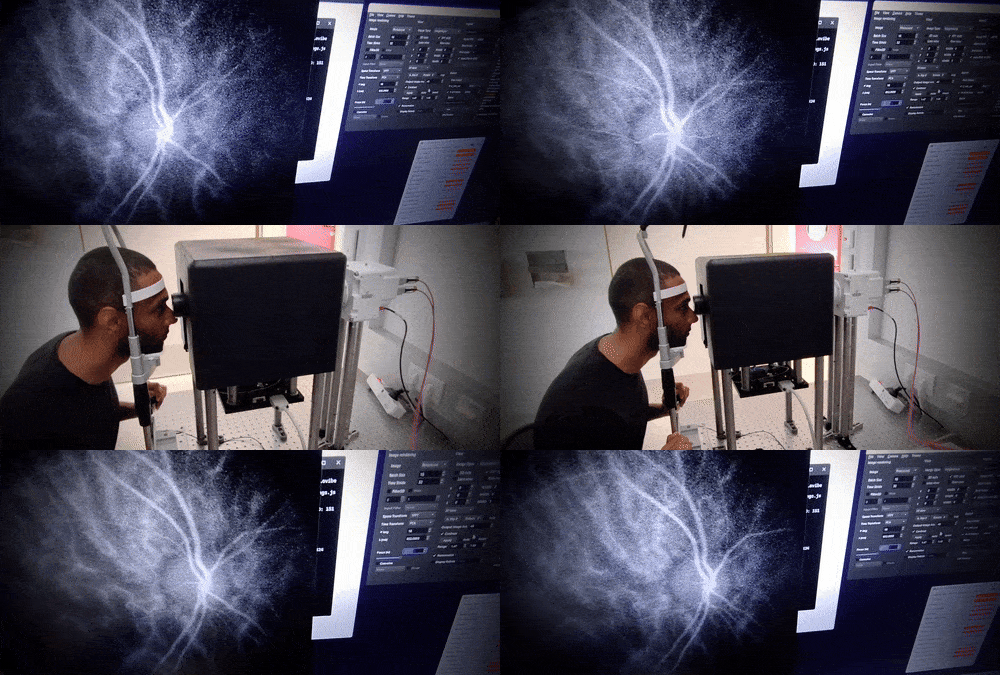
Let’s build your Doppler holography imaging device—together.
From concept to clinical-grade deployment, we support you end-to-end: hardware reference designs, high-throughput open-source software, and automated analysis workflows that turn raw holograms into standardized, beat-resolved biomarkers—ready for multicenter studies and real-world clinical use.
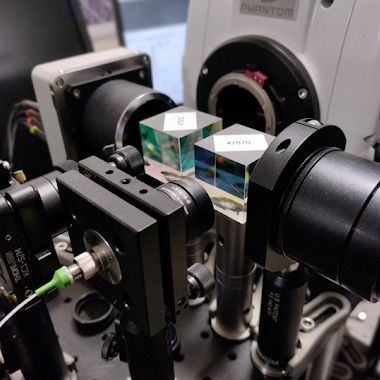
Hardware
Reference designs & build guidelines
We publish practical, field-tested design guidelines for ultrafast Doppler holography instruments:
optical layouts, alignment procedures, safety-minded illumination strategies, and the full bill of materials
for a reference clinical implementation.
Our goal is simple: reduce the barrier to entry so that a qualified engineering team can assemble,
align, and operate a robust device that survives day-to-day use—without vendor lock-in.
Start here:
instrument design slides,
and the
reference parts list.
Our hardware work also supports adjacent coherent-light modalities, including holographic
optical coherence tomography,
microscopy,
plethysmography, and
vibrometry.
Software
Real-time reconstruction & quantitative analysis
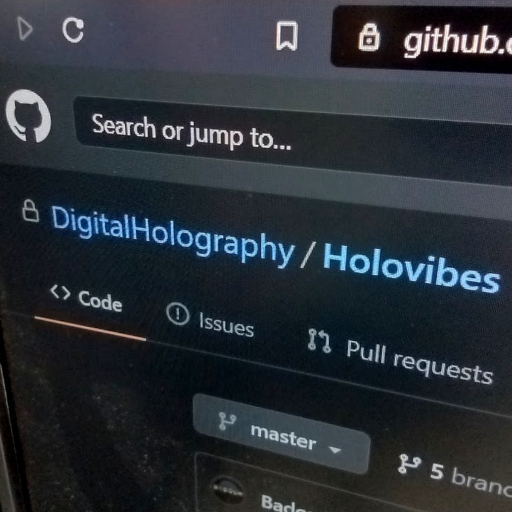
We build and maintain the open-source software stack that makes Doppler holography scalable:
Holovibes for real-time, low-latency rendering at ultra-high throughput,
HoloDoppler for streamlined reconstruction/processing,
and EyeFlow for automated quantitative retinal blood-flow metrics.
The stack is designed for:
operator-independent pipelines, built-in quality control,
versioned outputs, and clear audit trails—so results remain comparable across devices, sites, and time.
For cohort-scale operations, we also develop workflow tooling (ingestion, batch processing,
reporting, and structured exports) to move from “nice videos” to trial-ready endpoints.
Explore our GitHub repositories.
Support
Join the Digital Holography Foundation
The Digital Holography Foundation is a place to learn, build, and share state-of-the-art open tools for
computational imaging based on coherent light detection.
We help labs, hospitals, and companies move fast while staying reproducible:
device co-design, GPU computing, real-time rendering, and robust signal processing.
We also train students and engineers for a practical mission: building reliable, high-throughput imaging
software (GPU pipelines, streaming cameras, structured data formats, automation & QC) that can operate
in real-world research and clinical environments.
Our core offering: Digital holography support
Our primary value proposition is comprehensive, hands-on support for digital holography systems—especially
ultrafast Doppler holography for functional vascular imaging.
The Digital Holography Foundation accelerates adoption through
open reference hardware, open software, and standardized workflows for high-bitrate acquisition and analysis.
The outcome: a clear path from photons → holograms → quantitative metrics → clinical reports and cohort analytics.